Prime cost is food cost plus labour cost, divided by sales. It is the single most useful number in a restaurant, and most independents never calculate it.
Here is why it matters more than food cost alone. Food and labour are your two big controllable costs, and they trade off against each other. Buying pre-chopped vegetables raises food cost and lowers labour. Making everything from scratch does the opposite. Look at either number alone and you cannot tell whether a change helped. Look at prime cost and you can.
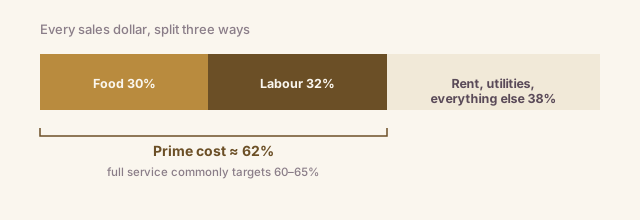
- Full-service operations commonly aim for somewhere around 60–65% of sales. Above that, there is usually not enough left to cover rent, utilities, insurance, and the loan — which is how people end up working eighty hours a week to break even. Your own target depends on your rent and your model, so treat that range as a starting point.
- Check it weekly, not monthly. Monthly is a post-mortem. Weekly is a steering wheel. If prime cost climbs, find out which half moved before changing anything — cutting staff when the problem was food cost makes service worse and fixes nothing.
- The most common cause of a labour problem is not overpaying. It is scheduling to habit instead of to forecast. Two overstaffed hours a day, every day, is a full salary over a year.